Thursday, December 23, 2010

A Christmas letter from the Land of Ataturk

Dear Friends (Meegan says this aloud, with a lisp.  “Please put a ‘z’ on the end of that,” says Emily.  “No,” Sarah says, unamused.  “How about f-r-e-n-z?”  Emily begs…):

                While Emily’s packing to take the train to Greece, we thought it would be a good time to sit down and write you a Christmas letter from Istanbul.  Starting, however, is harder than we thought it would be; we are three people, see, with three different brains, and distinctly different personalities.  Sarah, a Bryn Mawr linguistics major from Colorado Springs who spent the semester in Cairo, is the museum-pusher.  She and Meegan, also a Mawrtyr who spent the semester in Granada (not the Caribbean island spelled with an “e”!), Spain, had planned to meet for two weeks of adventure before going home.  Emily, from the University of Minnesota, was in Mombasa and Nairobi in Kenya for four months, has made her way north to Turkey and will continue on as she heads to Greece, Bulgaria, Serbia, Croatia, Austria and the Czech Republic before flying back to Minneapolis.  We met in a four-bed room in the Stray Cat Hostel four days ago in Istanbul, instantly “clicked”, and have been exploring this city of two million people and having a great time.

                Highlights on the sites front have included the absolutely stunning Blue Mosque and the Topkapi Ottoman Palaces and Harem, also stunning and which contained supposed holy relics including Moses’ rod, John the Baptist’s forearm, hand and skull, Muhammad’s beard, Joseph’s turban and Abraham’s saucepan.  We did some shopping at the Grand Bazaar, the Spice Bazaar and the bazaar that locals actually use and which is much more exciting, and then headed to Galata Tower, from which we had some amazing views of the city.  The enormous Underground Cistern, built somewhat like a giant, wet, underground Roman temple and sort of with that atmosphere, too, was fun because we (read: Sarah) got to try and identify the different kinds of columns represented.  As it turns out, Doric, Corinthian, and Ionic styles all made an appearance.  Our favorite museums thus far include the Turkish Train museum at the train station, the Istanbul Modern and the Museum of Turkish and Islamic Art. 

We have also been to Taksim Square near our hostel and up and down the very European-looking thoroughfare that is Istiklal, then carried on over the Galata Bridge – which is lined with fishermen who somehow manage to catch fish within their own square meter of space without getting their lines tangled up with any of their neighbors’ – and to the nearby fish market.  We also made our way to many parks, in which Sarah and Emily relieved their green-starved eyes, and into the so-called New Mosque, which looked very similar in style to the Blue Mosque but was more frequently used as an actual prayer space by locals.  While entering the latter, we witnessed a group of older women outright prevent a pair of younger women (who we think were Turkish) from entering the mosque in their short skirts (bad taste, in our opinion, no matter where you are in the world) and without head coverings while the men supposedly in charge of ensuring proper dress in the tourist population looked on and seemed not to care – we were struck by the scene and were interested in the fact that it was not men but women who were policing female modesty in the mosque.

                Our range of other experiences has included a lot of walking, eating and bathing Turkish-style.  There are a lot of hills in Istanbul, and though we’ve figured out the wonderful tram system pretty well, in order to really see a city it’s good to walk, especially if you’re a penny-skimping student like we are.  So we’ve been a little sore, and always are completely exhausted by around 7 pm – we’re a bit tired as we write this, actually.  The other day, we opted for a Turkish bath (called a hammam) experience in the evening after a long day of walking and were incredibly pleased with the results.  The bath was incredibly inexpensive and included spending an hour in a steamy marble room, in which we bathed ourselves with warm water (and yes, engaged in a few water fights) and then got scrubbed, massaged and soaped down ‘til we were literally squeaky-clean by a lovely woman who hummed Turkish tunes under her breath.  It was one of the most relaxing experiences that we (collectively) have ever had – except when Meegan erupted in uncontrollable giggles upon having to undergo massage where she is most ticklish.  As for our culinary experiences, we’ve eaten just about every kind of cheap street food we’ve seen: roasted chestnuts, fresh fish sandwiches (with quite a bit too much raw onion), bagel-like breads, lasagna-like pizza, pizza-like sandwiches, rice with chickpeas, the best pomegranate ever grown, sweet tea, Turkish delight and baklava, dried fruits and nuts from the bazaars, and kebabs galore…  It has all been delicious, and none of us has gotten even the slightest bit sick, which is a plus.  Unfortunately, we seem to do quite a bit worse when it comes to trying to prepare our own food in our hostel: we’ve discovered that powdered soups made with not-quite boiling water are not really a great idea (our “tomato soup” yesterday turned out to be a neon-pink color), and most of our dinners have consisted of bread and cheese with unhealthy amounts of sweetened yogurt and cheap ice cream from the small grocery store across the street.

                Our next adventures take us in vastly different directions (Emily to Eastern Europe; Sarah and Meegan to Jordan and Israel) but we’re thrilled to have happened to end up in the same place for such fun adventures.  We’re all in the process of transitioning from “Study Abroad” mode to “home,” and Istanbul has been a great place for that.  We hope that wherever you are on this Christmas Eve (eve), that it’s a pleasant one and that you’re having adventures (small or large!) of your own.

Much love and best wishes,
Emily, Meegan, and Sarah
Wednesday, December 22, 2010

Istanbul Day 2


So it’s day #2 in Istanbul, and another great series of adventures.

Today Sarah and I, along with our hostel roommate Emily, got up early to go to the Blue Mosque first thing.  The sign we read last night said: “Ladies must wear long skirt and cover head”, but we were surprised by the number of women who did not cover their heads (we did, and the majority did, but not all) and we certainly were not all wearing skirts.  We arrived at the mosque, took our shoes off, and entered, and my reaction was to jerk to a stop right inside the entrance, holding my shoes, and say, “whoah”.  It’s really fantastically amazing on the inside, with huge domes, all colorfully painted, stained glass windows that let in a lot of light, and lights hanging down.
The carpet is really nice on your feet, and we sat down at the base of a column for a while to admire and rest.
Sarah taught us to recognize some of the Arabic script from the Quran that was written on the walls and explained how the musical notes you’re supposed to sing while reading the Quran are actually written in the script.  I talked to Emily and Sarah for a brief while about some of the architectural elements I had learned about in my class this semester – the huge minbar at the front to the side of the mihrab (both are places where the imam sits/stands to conduct prayer, but the minbar is raised on a high platform so that his voice can reach the far corners of the mosque and the faithful can see him), the dikkas (platforms spaced out through the mosque where some other guys pray, imitating the imam’s movements, so that those who can’t see the imam from where they are can see what they’re supposed to be doing), and the maqsura (the enclosure reserved for the sultan, very close to the mihrab or the minbar and closed off with lattices so that the sultan could pray on Fridays with the rest of his subjects without the rest of the faithful being aware of his presence).  It was really quite amazing.

We then went for a walk through the Grand Bazaar – it looked more like a shopping mall than a Middle Eastern bazaar – and through the Spice Bazaar – which was much more exciting, a bit smaller, a little more disorganized, and we enjoyed it because it had everything to do with food:
 Since we’ve been in Istanbul, shopkeepers all over the city have tried to lure us in with every imaginable catch phrase, usually saying: “Yes please?”  (To which we naturally respond “No, thank you”…  Once yesterday when this exact exchange occurred the man commented immediately afterwards, completely non-sequitur, “You all wear glasses” – why, thank you, storekeeper man, I wasn’t aware of that!)  Today in the bazaars we heard some new tries: “Hello, can I help you spend your money?”  (I liked that one – at least it was completely honest); “It’s my birthday – buy some Turkish delight!”; and “Hello, beautiful ladies!” (which we chose to ignore completely).  Between the bazaars - in the REAL market - we stopped to eat lunch at a kebab place, where I had the most delicious chicken kebab ever.

After our bazaar adventure, we took a ferry across the Bosphorus to the Asian side of Istanbul, where it was much quieter and much less touristy.  We bummed around a bit, found a nice park to sit in, found our way back to the coast and watched the sun set over the skyline of mosques from the rocks.
 We made our way back in another ferry and admired the city night lights all around us.  Upon docking we ate a delicious fresh fish sandwich on a bench covered in cardboard under a pedestrian bridge – the perfect setting for a street scene in My Fair Lady, according to Sarah – from the guys who fish all in a row all along one of the bridges across the Golden Horn (I would be surprised if their lines don’t constantly get tangled up…):
Istanbul is great.  Tomorrow (today, by the time I post this) we have a hammam (public bath) trip planned, along with the Galata Tower and wandering around the area that we’re staying in!

Monday, December 20, 2010

Day 1 in Istanbul

...I think this blog has the potential to be more about my travels outside of Spain than in them... until I get around to talking about all the backlogged stuff I have to talk about from Spain...


I’m in Istanbul with Sarah Theobald (a friend from Bryn Mawr who was studying in Cairo this semester)!!!!!  We went today with our hostel roommate Emily (not my Spanish roommate Emily, but she’s just as nice) on some adventures.

After the best hostel breakfast ever (raw cucumbers and tomatoes – the first I’ve had since leaving home that haven’t been covered in salt and olive oil – fresh cheese, yogurt and bread and Nutella), we took the tram to the touristy part of town, intent on doing all that stuff first so that our more intense exploration would take place later.  Our first adventure was to the underground cisterns from Justinian’s time (532 AD and renovated in 950, re-renovated in 1985 and opened to the public for tourism), which was HUGE and totally worth the 10 lira and included two pillars with enormous Medusa heads at the bases.
Once upon a time, it held 80,000 cubic meters of water, just so you get an idea.  We made wishes with small coins and admired the enormous fish, walked around in the damp and were completely in awe.
Then we accidentally wandered past the Hagia Sofia and into what appeared to be a park at first - these were just some ruins hangin' out there... y'know, ancient stuff:
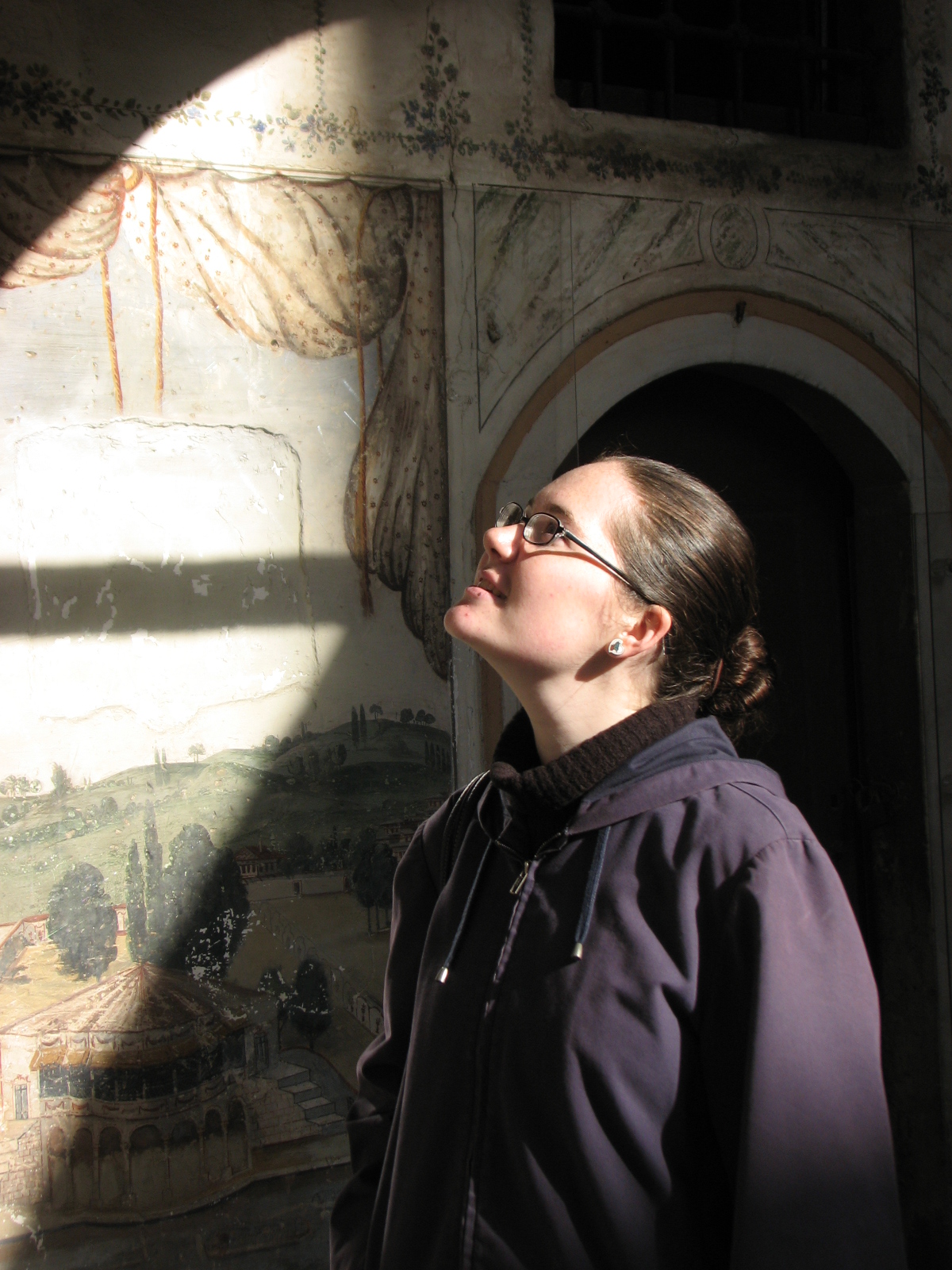
...but was actually the entrance to the Topkapi Palace complex, where the Ottoman sultans hung out and, you know, also ran their empire until the 19th century.  This is Sarah and Emily being impressed:
We went to the harem, which was surprisingly AMAZING and also very important politically, basically the place where all of the royal family intrigue took place...
...and also saw the exhibit of religious relics that belonged to the sultans – including supposedly Moses’ staff, John the Baptist’s hand and forearm and skull, Muhammad’s beard, and Abraham’s saucepan (the latter was my favorite).  It was… fascinating, to stay the least.  There was also a guy singing the Quran live for the museum visitors, which was also interesting – I was surprised it wasn’t just a recording.  We wandered around, in and out of amazingly tiled, inlaid and carved rooms, saw the royal treasure and admired the view of the Bosporus and the Golden Horn River:
 We had a late lunch of bagel-like street bread and the best pomegranate ever grown that we shared while sitting on a wall – while we were eating, we were approached by two Turkish medical students who wanted to practice their English, and they were really sweet and we had a rather awkward but very nice conversation with them.  While trying to find the Blue Mosque, we stopped for tea and baklava at a small place near the Grand Bazaar, which was delicious.  Basically, today was a day for awesome food.  We found the Blue Mosque, which is really impressive, especially when all lit up at night:
...but it was prayer time and we had not brought scarves so we couldn’t go in past the patio anyway.  We plan to go tomorrow morning.

Also on the plan for tomorrow: crossing the Bosporus on a boat and exploring the Asian side (a new continent!), going to the Grand Bazaar, eating fresh fish from the bridge where nearly a hundred men are lined up with fishing poles and buckets, and possibly seeing the Hagia Sofia even though we’ve heard from fellow hostellers that it’s overpriced and not worth it…

Here is a map of Istanbul, with the place we are staying and the region we explored today:
I'll keep you updated, because evenings in the hostel are low-key and relaxing...

Much love!

some random end-of-semester travel thoughts

In the past 4 years, I’ve been in a lot of airports and on a lot of planes, and in more of those than ever in the past 4 months.  I have recently flown in and out of:


…England, 

…Ireland,

…and Spain (of course).

I am currently in the Barcelona airport, and pretty soon I’ll add Turkey to that list, where I plan to gobble upon arrival.  I’m waiting for my flight to Istanbul in a few hours for what I am anticipating will be the best trip of my life, with fellow mawrtyr (as in Bryn Mawr) Sarah Theobald who just finished studying in Cairo this semester, to and through Turkey, Jordan and Israel.  This is Sarah, for those of you who do not know her – and, no, she does not always make faces imitating sushi patterns:

She’s a lovely lady and I’m excited to see her again and catch up on things.  Needless to say, Christmas will be spent in Istanbul, where as far as I know Christmas is not a big deal, seeing as the majority of Turks are Muslims and Christmas is really about Jesus even if we estadounidenses pretend it’s not or try to disguise it with capitalist marketing (everyone knows that Jesus + capitalist marketing = “the most wonderful time of the year”).

My friend Jess, also fellow mawrtyr and IES student, bussed with me yesterday from Granada to Madrid, where we spent a grand total of 5 hours sleeping in a hostel bunk bed and got up at “ass-o’clock” (I can’t remember who I picked that phrase up from, but whoever it was I blame them for my language) to catch an incredibly expensive taxi with an incredibly cheerful driver to the airport.  Jess is off to Poland for three days before heading home for Christmas, so we split up, she went to catch an earlier flight, and I was left all alone in the airport for four hours, having just realized that I left my Spanish cell phone in my hostel bed in the rush to get out the door in time for her flight…  My flight from Madrid to Barcelona was easy and I slept part of the way which was a pleasant surprise; the Barcelona airport is shiny, and warm, and with a pleasant acoustic system that makes everything seem quieter than it really is.  Too bad my lunch was the most expensive airport food I’ve ever had – 8 euro for a chicken sandwich, though delicious because I was starving.  Also too bad is the fact that I haven’t actually been to Barcelona yet; this semester, I was set on going to Barcelona and to Santiago de Compostela, but never got around to either.

Our semester in Granada officially ended on Friday, after a frantic two weeks of exams, projects, presentations and paper-writing that was super-intense despite the deceiving start to a semester that originally seemed would be the easiest I had had since high school – strangely enough, the work load started exponentially increasing right around the time I stopped writing in this blog.  Technically University of Granada courses are still in session, and I still have a paper left to write that was due *last week*, not to mention the 2 papers more that I’ll have to write in January and February as classes in Spain are finally ending and I’m already starting spring semester at Bryn Mawr… but the bulk of work is over, and it feels good to be on an almost-vacation.  To celebrate, on Friday afternoon I got my hair cut again – I now no longer look like a shaggy cocker-spaniel.  I’m also glad that I’ll be returning to Granada before going home indefinitely – studying and paper-writing is not my idea of a proper good-bye to any place.  I’ll be spending the Three Kings holiday (January 5th) with my host family and then staying a week, wrapping things up, saying goodbyes, and going home to cooooooooooooold Vermont on the 11th:

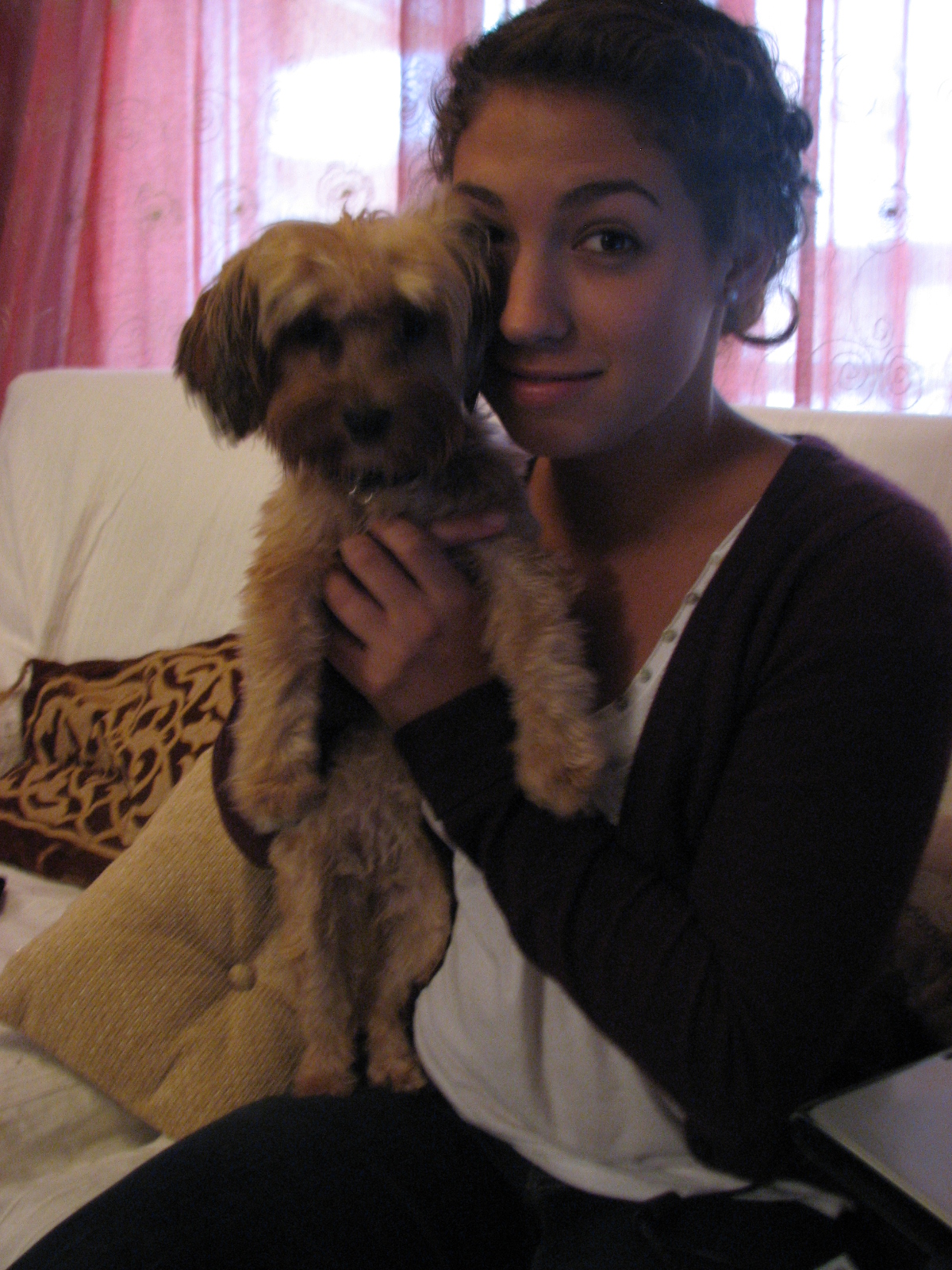
That extra time will hopefully give me the mental and emotional space I need to deal with leaving.  The majority of IES students are leaving today, however – probably frantically dealing with packing and travelling, and will be home for the Jesus + capitalist marketing holiday.  We had a fancy farewell cocktail party on Friday evening with IES, complete with crying professors, delicious fried shrimp on sticks, a slideshow of photos that no one could really see because the lighting wasn’t great, and a bit too much wine.  I had every intention of staying up all night dancing with friends afterwards but I was too tired to hold my eyes open, bummed that my new barista-friend from the café I get coffee at every morning couldn’t come out with us because she had to work early in the morning, and generally sad that pretty soon I’d have to say goodbye to this place for who-knows-how-long… so I went home to my bed at around 4 in the morning and slept like a rock.  I woke up in the late morning to a gross rainy day, went to the pharmacy to buy some Dramamine (my new favorite drug, because it makes me not restless and not pukish on buses – I discovered it while desperate in Morocco at the beginning of this month), packed my bags, and had one last mini dance party to “Dynamite” with Emily, the best roommate on the planet, and Campanilla, one of the best dogs on the planet.  

Then Hortensia and Emily drove me to the bus station in the car that Hortensia had finally gotten back from the mechanic’s that morning, having dropped it off before we even arrived in September.  (I had been starting to doubt of the car’s existence.)  Jess was a pleasant bus companion, and is pretty much a pleasant person in general – this is her, getting over her fear of monkeys in Gibraltar a few weeks ago:
I wish her a happy time in Poland, and wholeheartedly advocate for her buying a pair of boots while there… flats ain’t gonna do it in below-freezing Eastern Europe.

This is a rather random post, following my thoughts a bit.  I’ve mentioned a whole bunch of recent travels that I have not yet written details about, so I hope (I shall make no more promises – we all know where that got me this semester as far as blogging) to write some more soon and tell more about said trips, as well as some things about Granada and the adventures of Sarah and Meegan in the Middle East.

I’m going to go get on my Turkish Airlines flight now!


Tuesday, October 12, 2010

Lorca and Pigs


This past weekend, as part of my Federico García Lorca literature class, we went to visit Lorca’s two childhood homes in Fuente Vaqueros and Valderrubio, two very small towns outside of Granada.  This is part of our class at the Fuente Vaqueros house (where Lorca was born), with our professor, Concha, second from the left in the standing row and Eva, one of the other IES directors, to her right:


This photo was taken in the patio, because we weren’t allowed to take any pictures inside the house.  It was a small house (big for its day, as Lorca’s father was an important landowner) with very small furniture.  We asked why everything was so small, and our professor explained that, quite simply, it was the style at the time.  It was mostly just a house, missing some furniture, as in the case of the homes of many famous authors.  Louisa May Alcott’s house comes to mind.  We saw the bed where Lorca was born, the crib where he slept, the kitchen with the hearth, and the upstairs, which is currently an exhibit about Lorca in New York City but used to be where his father’s agricultural products were stored.

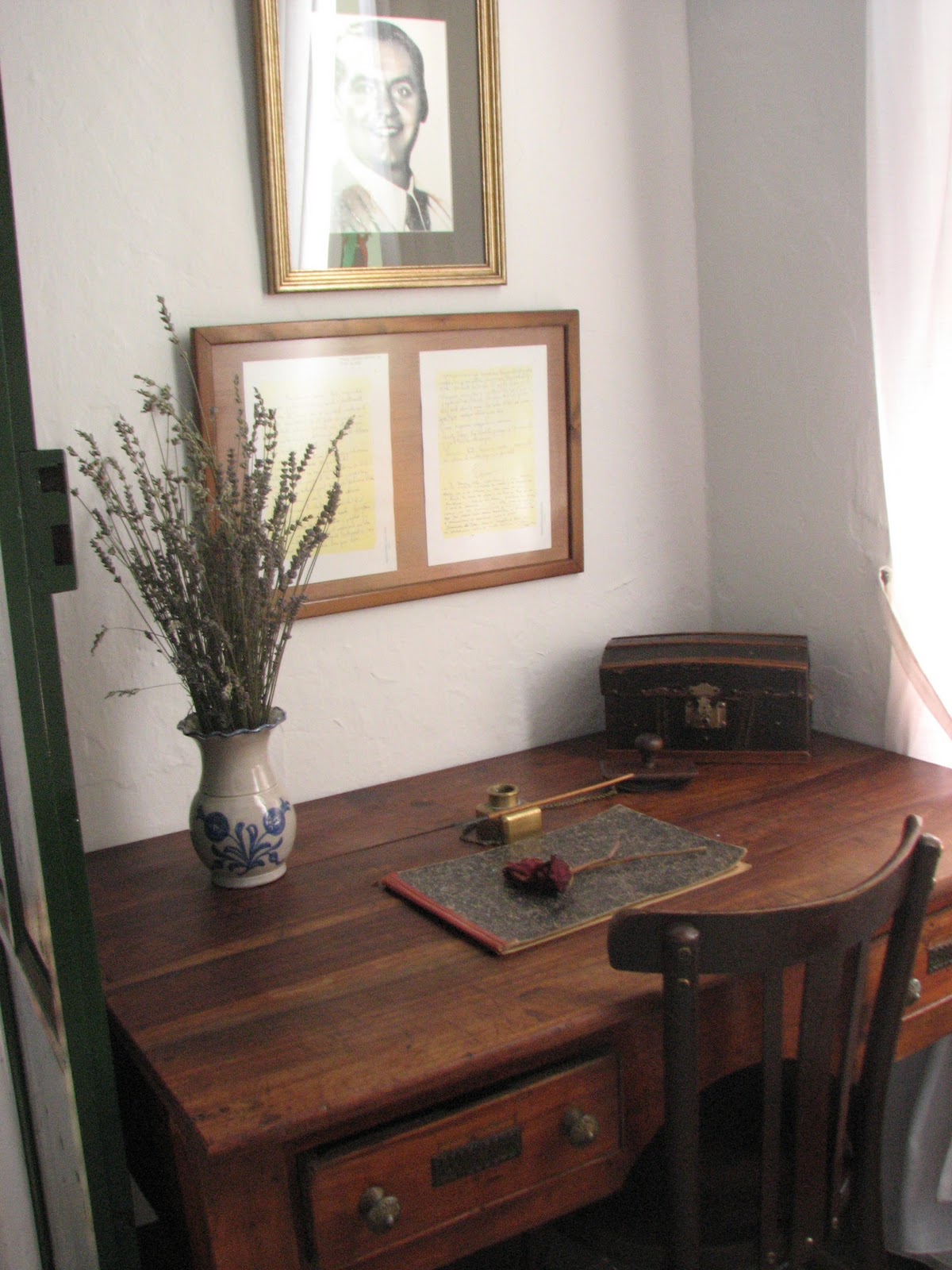
The house in Valderrubio (which in Lorca’s time was called Asqueroso – meaning “Disgusting”; there’s a reason they changed the name) was much larger and fancier, but aside from that also had much more relevance to Lorca’s work.  He only spent the first few years of his life in Fuente Vaqueros, but it was in Valderrubio, on the other hand, where he spent the majority of his childhood.  When his family moved to Granada they continued to come back for the summers, and as Lorca got older and began to write he spent a good deal of his time writing in Valderrubio, the town from which he drew much of his inspiration.  This is the desk where Lorca wrote in the summers in his later years – as in the house of any author, the most prized possession of the museum:


And this is the well which served as the instrument in providing the inspiration for his play “La Casa de Bernarda Alba” (The House of Bernarda Alba).  The well was shared by two families – the other house belonged to a woman named Fernanda Alba, the real-life version of the fictional character, and it was possible to hear the conversations that went on in that house by listening through the well:

 
…But, really, Fuente Vaqueros and Valderrubio were almost more useful for learning about Spain in the early 1900’s than for learning about the life of Lorca.  As in Fuente Vaqueros, the Valderrubio house was lived in only in the downstairs – the second floor was used for storage of agricultural products:


…and for the materials used during annual matanzas, annual pig-butchering gatherings that most Spanish families in the countryside used to have (and in which some continue to participate).  The guide at Valderrubio was a particularly talkative man, and enjoyed talking about his own experiences growing up in the Andalusian countryside.  He talked for nearly half an hour about the matanzas of his childhood and with the awesome audio-recording application on my camera I recorded part of what he said.  I’ve made an English-translated transcript of excerpts of the recording, which may be of interest to you if you’re able to stomach detailed descriptions of pig-butchering at the moment:

“The matanzas usually happened in the winter time, in the cold months, usually in December, just before Christmastime, to have food at Christmas.  It was like that.  I remember it… ooohh, such good memories.

“They made murcilla (blood sausage).  And, well, shall I tell you what the matanzas were like?...  Well, the first thing that had to be done was, well, take all of these tools, everything you see here:


"…outside.  It all had to be out in the patio.  So, you see, this (room) is where everything was stored, but the matanzas themselves always took place out in the corral, or even in the street – if the house was very small and there wasn’t enough space, well, then right in front of the door to your house you held the matanza.  So you took the bench, the one you see right here:


"And you caught the pig, and you lay the pig down on the bench.  So then they took the head off, and then with a knife they cut it here (in the neck) so that the blood would drain out.  And a woman, kneeling, with a big bowl that filled up with the blood, she kept the wound from clotting up, so that all the blood would drain out.  Then when the blood was all out, they took the blood and put it inside a bag, or in a big pot if they had it, but almost always in a bag, in order to later make murcilla.

“…Then they started to take off the skin…. leaving it very white, like it was ready to have its first communion, all white.  And then they took this (holding up a wooden yoke-like piece of wood).  This is called a camal… and at either end of the camal you put one of the pig’s feet.  And in a stairwell, if you had a stairwell – and if not, always in the patio there was a kind of stick where you could hang it up – and you hung it up, the pig on the camal.  You took out the guts, which served for all kinds of things, and you hung the pig up for the night.  This is why they always did it in cold times of the year – they wanted it to get cold, so that the meat would get hard, so that it would be easier to cut through, because it’s a lot of work if you don’t, you know?  And so they left it for the night, and then the next day someone who knew how to do it would come and… take off the different parts of the meat, separating it into the different things it could be used for, see?  And then when the pig was all cut up, then the women started to transform it into food, and they said, this is for salchichón (like hot dogs), this is for chorizo (sausage), and the ham, well, they took it and they washed it, and then they cured it – there were lots of ways to cure ham.  They put it in salt.  If a piece of ham weighed 10 kilos, well then it had to spend 10 days in salt.  1 day for each kilo.  And so they had it in the salt, later they took it out and the hung it up…. The murcilla, with the pig’s blood, was cooked with onions.  Even the bones were used for things.  With the pig, nothing was wasted.  Everything was used for something.  Everything.  Very, very, very little was thrown away.  And then there was the bacon.  The bacon was so good – ooooooohhhh!!!  So good!”

Jamón (pork) in Spain is highly prized, and matanzas were highly important social events, similar to corridas de toros (bull fights) but on a much smaller scale and less an accepted art-form than a survival technique.  The guide at Valderrubio lamented the fact that they are dying out, citing the fact that people are less connected to their food now, not wanting to face the actual death of the animal – “these days,” he said, “we’re all lazy” – and are missing out on the social gatherings that the matanzas once facilitated.  I must agree with him, though I have to admit that I wouldn’t be particularly keen on butchering a pig myself – a fact which actually has a great deal to do with my choice to remain partially “vegetarian” here.  I haven’t been eating red meat or pork for a few years now, and I’ve chosen not to start again now this semester.  I find it difficult to justify eating an animal that I cannot be sure has lived a good life and that I could not bear to kill myself.  This means that I’m missing out on a lot of Spain’s traditional pork-based foods.  (I am, however, eating a LOT of seafood dishes, which are just as famous and much more delicious!)  Nonetheless, I think it’s very important to learn as much as possible about Spain’s food culture, in which jamón plays a very important role.

So, in the end, the Lorca trip was quite well-rounded.  Moody poet-playwrights may not appear to have much to do with pig-butchering… but in reality, Lorca was most inspired by life in the countryside, and matanzas certainly formed an important part of that life.

Friday, October 8, 2010

The moral of the story is: In Granada, One Walks


I have been a terrible blogger.  For this, I beg your pardon.  In desperate search for an excuse, even a weak one, I’ll say that walking in Granada has been taking up a much larger chunk of my time recently… and walking just so happens to be the subject of this post.  Read on.

Granada is made up of many different kinds of streets.  Some look like this:

 (this is the street I live on, view from the balcony)

Others look like this:


Still others look more like this:

(the girls being silly are other IES students, including my lovely housemate Emily, second from left)

And some even go through 11th century, 4-foot-thick city walls like this:


As you can imagine, depending on where you want to go in the city you may need to go through something that looks more like the last two.  A car, obviously, would be impossible.  Even in situation number two a car would be impractical; hence the motorcycles.  In situation number one, cars can drive… but not always park.

To this potential problem, granadinos have a very simple solution – and a very un-American one:  WALK!

The street in Spain is a public space.  Instead of being taken up by angry car-drivers constantly trying to claim “their” space on the road, or even by rushed pedestrians with iPods who ooze “leave me alone” vibes, the streets, sidewalks and plazas in Spain have an incredibly important social function.  You want to get together with friends?  Meet in a plaza or on a street corner and not in someone’s house.  Is there a small street where there is no sidewalk?  Well, then you walk in the street and if a car or a motorcycle comes by they’ll just have to be patient.  Is it between the hours of 8 and 11 pm?  That means it’s time to go for a paseo with your family or friends.  (Paseo is a daily event that consists of ambling around on the street, stopping to talk with everyone you know, eating an ice cream, doing some leisurely shopping, linking arms with friends, pushing baby carriages, kids carrying balloons…)

Granada is also a very small city – or a very large town, whichever way you’d like to look at it.  This means that EVERYTHING is within walking distance.  (“Walking distance” may mean something different in Granada than in North America, but we’re talking in Granada terms here.)  Walking is therefore the main means of transportation.  You walk to get your groceries (there are even tall baskets on wheels that many people use to put their groceries in for the walk home).  You walk to school (children in uniforms are particularly predominant on the streets at certain times of day).  You walk to work.  You walk to get to places to be social and you walk to be social.

So I walk, too.  This is a good thing.  I like walking.  It gives me time to think, gives my brain a break and gets my body going, especially in the chilly early mornings.  I also now have killer calf muscles.

In the beginning of my stay in Granada most of my activities were centered around the IES study abroad center, where I take the majority of my classes, a 20-minute walk from my apartment.  Because I have both morning and afternoon classes, I made and continue to make that walk every week day at least four times a day: going to IES in the morning, returning home for lunch and siesta, going to IES again, returning home for the night.  Most nights, paseo and tapeo (the act of going to get tapas) form part of the routine, which means leisurely walking and exploring the city and may include going to a tapas bar, ice cream place, or kabob vendor (pronounced and spelled “kebap” here) clear on the other side of the city.  Here is a map of the areas I frequent in Granada.  The yellow dots are my favorite places to eat, the green dots are where some friends live, and the orange lines mark areas that are best for paseo and walking exploration.


Two weeks ago, however, university classes began.  This changed things a bit.  University of Granada buildings are spread all over the city, and each building represents a different department, called a facultad.  As an anthropology and Spanish major, I now take some of my classes in the Facultad de Letras y Filosofía – literally translated, “The Faculty of Letters and Philosophy”; in a more comprehensive fashion, “the place where you study a whole lot of theory”.  I am enrolled in an Economic Anthropology class in the late morning at the Facultad and am auditing an art history class about Mudéjar art in the evenings; each class meets twice a week.  La Facultad de Letras y Filosofía is an enormous cement building into which all of the academic buildings on Bryn Mawr’s campus would easily fit.  It is also located on the largest of the University campuses, called La Cartuja.  From Cartuja there is a great view of the city of Granada:


…which means it’s up a large hill.  It also happens to be about as far from the city center as you can possibly get.  From the IES study abroad center it is a 30-minute walk, if I walk fast.  From my apartment, a 40-minute walk, bookin’ it.  So far I have come to every single one of my university classes panting, drenched in sweat, and a number of minutes late.

In the end, my most regular daily route around the city looks like this:


Or maybe better represented like this:


Yesterday, I timed the amount of walking I did over the course of the day – a normal week day with classes.  My final, non-exaggerated calculation: just a little over 3 hours.  That was 3 hours not spent writing for this blog.  My excuse being made, I now hope to remedy the recent lack of blogging by very soon posting about concerts of many types, awesome architecture, classes, my trips to Sevilla, Ronda, Nerja, and the towns near Granada where the poet/playwright Federico Garcia Lorca was born and grew up, and other details about life in Spain and Granada in general.  For now, saludos.